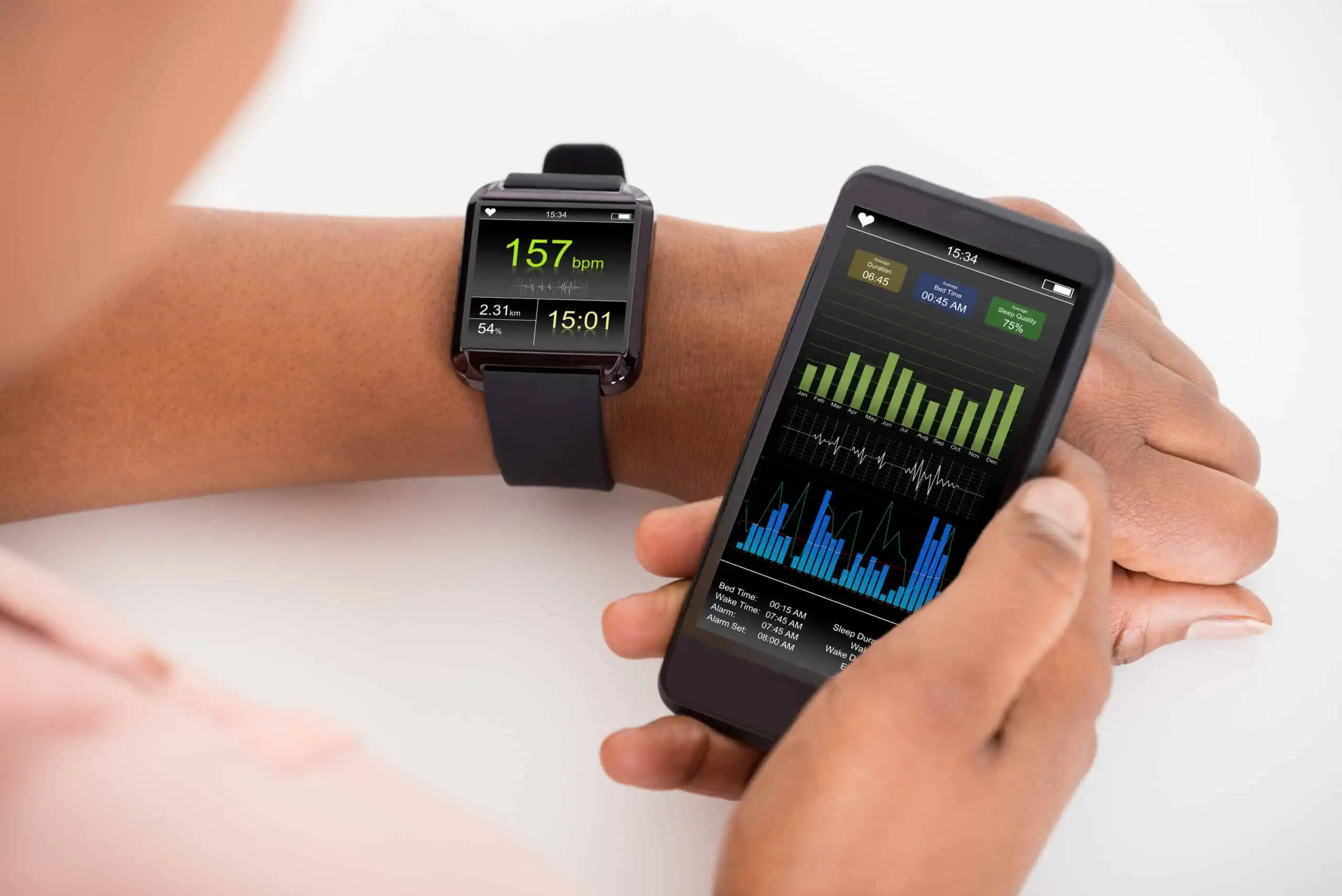
Opening of the Workshop
The workshop was opened by Mr. Shuji Hirakawa, the Chair of TC 124, at 3:15 PM. In his opening remarks, he emphasized the importance of standardization in the rapidly evolving technology sector and welcomed participants to the day’s program.
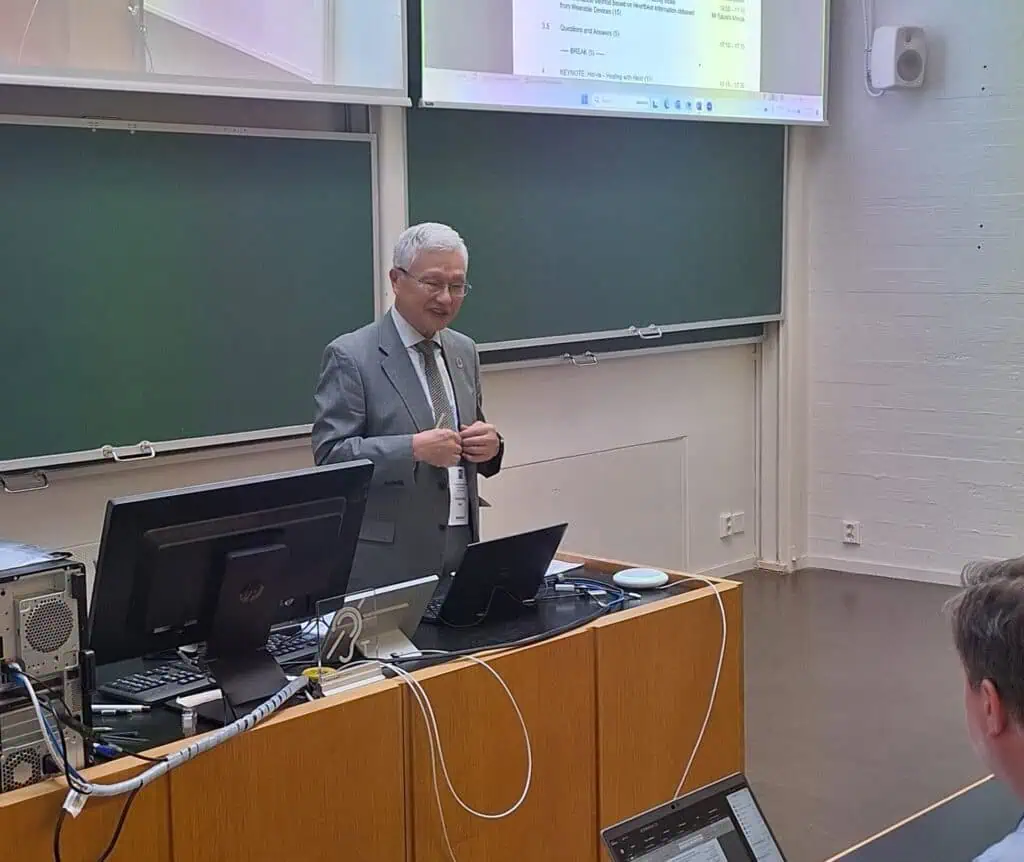
Person in the picture Mr. Shuji Hirakawa
PAST and PRESENT activities and publications
At 3:20 PM
Mr. Jaeyeong Park began the first session by presenting the historical background and working group structure of the TC 124 committee. IEC TC 124 was officially established in February 2017, but its roots go back to November 2014, when the first proposal was made in Tokyo. An ad-hoc group 56 was subsequently formed, and in June 2015, a strategic group 10 was created to assess the possibility of establishing the TC. The first meeting was held in Seoul in September 2017. Mr. Jaeyeong Park highlighted the importance of miniaturization and adaptability of portable smart devices, as well as their integration into healthcare and environmental monitoring.
Participants also heard market analysis predicting explosive growth in the sector—the market is expected to grow from $30 billion in 2015 to as much as $150 billion by 2026. The workshop also covered the latest innovations, such as smart clothing and devices.

You can download the presentation related to the speech from here.
At 3:35 PM
Mr. Henry Yi Li from the University of Manchester and Mr. Satoshi Maeda from the University of Tokyo (and TOYOBO Co., Ltd.) presented projects from Working Group 2 on e-textiles. IEC/TC 124 Working Group 2 (WG2) focuses on standardizing e-textiles by developing measurement and evaluation methods for textile materials, devices, and systems with electrotechnical functions. Since 2016, the working group has published several standards and projects, including measurement methods for smart textiles, interactive textiles, and electronic textiles. Future work will focus on active functional elements in e-textiles and testing of clothing products.

You can download the presentation related to the speech from here.
AT 3:55 PM
Mr. Deok-kee Kim discussed the devices and systems of Working Group 4. Technical Committee TC124 Working Group WG4 (Wearable Electronic Devices and Technologies) will meet on June 6, 2024, in Otaniemi, Espoo. Mr. Deok-kee Kim Chairs the group, with Veronica Lancaster serving as Vice-Chair. The seminar highlighted the group’s objectives to develop measurement and evaluation methods for wearable electronic devices and systems, particularly implants, patches, and ingestible devices. The group also focuses on standardizing systems, applications, and services.
WG4 held its first meeting in Busan, South Korea, in 2018, and has since met in places like San Francisco and Shanghai. The group has significantly expanded, now including 88 members from 11 different countries. Ongoing projects include developing performance measurement methods for fitness tracking devices and creating data and cybersecurity standards for mobile wearable devices. The next TC124/WG4 meeting will be held in Washington, DC, USA, in November 2024. At the end of the session, the audience had the opportunity to ask questions.

You can download the presentation related to the speech from here.
FUTURE Projects
At 4:30 PM
Ms. Youngmin Jun from the Korean National Committee (KNC) presented a new standard, a joint working group WG6 project for testing the performance of wearable electronic heating products. Standard IEC 63517 defines test methods for measuring the heating power and energy consumption of heating textile products. The standard focuses on the performance of heating textiles, not their safety aspects, which are covered by other IEC standards.
The presentation emphasized the growing importance of e-textiles in the market, with heating products like jackets, vests, gloves, socks, and insoles increasingly used in cold conditions by winter sports enthusiasts, military personnel, and healthcare workers. The need for an objective and comparable testing method to reliably evaluate the heating capability and energy consumption of products was highlighted. The new standard provides detailed guidelines on preparing test samples and selecting measurement points for environmental conditions. The new standard aims to meet market needs and improve performance measurement of products, benefiting both manufacturers and consumers.

You can download the presentation related to the speech from here.
At 4:40 PM
Ms. Veronica Lancaster, chair of the US National Committee and co-convener of TC 124 WG 4, presented new standards for evaluating the performance of stress and sleep measurements in wearable devices at the workshop. Lancaster introduced the PWI 124-9 standard proposal for stress measurement performance and the PWI 124-11 standard proposal for sleep measurement performance. She emphasized that the goal of these standards is to unify measurement methods and improve the accuracy and reliability of information consumers receive.
Ms. Lancaster stressed that while current devices already monitor stress and sleep, the accuracy and reliability of these measurements can be improved through standardization. She highlighted that the growing market and need for more precise measurements are particularly important in North America, Japan, India, Germany, the UK, and China. The working group led by Ms. Lancaster continues to develop standards in international cooperation, aiming to create unified, reliable, and accurate measurement methods that benefit both device manufacturers and consumers worldwide.
You can download the presentation related to the speech from here.
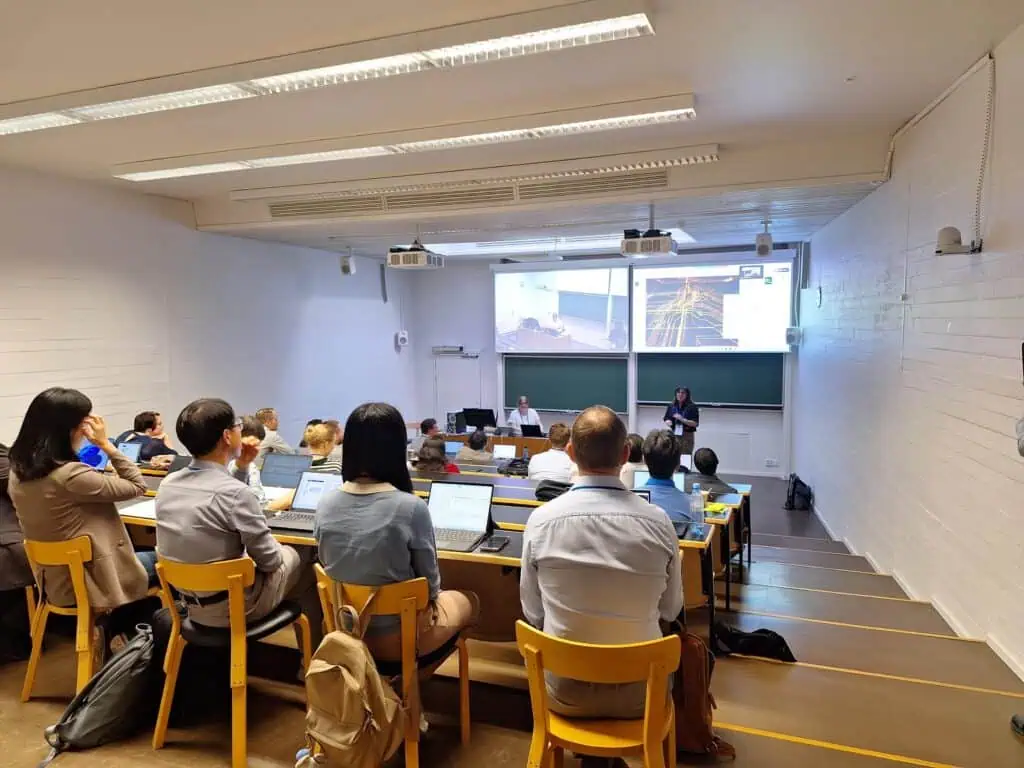
Presenter in the picture is Ms. Veronica Lancaster
AT 4:55 PM
Mr. Sanjeev Singh from the University of Delhi presented a comprehensive proposal for ensuring cybersecurity in smart devices. With the exponential growth of smart technology, such as smartwatches and fitness devices, the need for stringent security measures to protect sensitive user information is paramount. The proposed standard, PWI 124-12, aims to address many aspects of cybersecurity in smart devices, such as access control, data encryption, event management, and privacy protection. By providing clear guidelines and testing methods, the standard aims to ensure the integrity and privacy of user data in various smart devices and networks. Singh emphasized the importance of international collaboration in protecting user privacy and maintaining the integrity of user data in the rapidly evolving landscape of smart device technology.
You can download the presentation related to the speech from here.
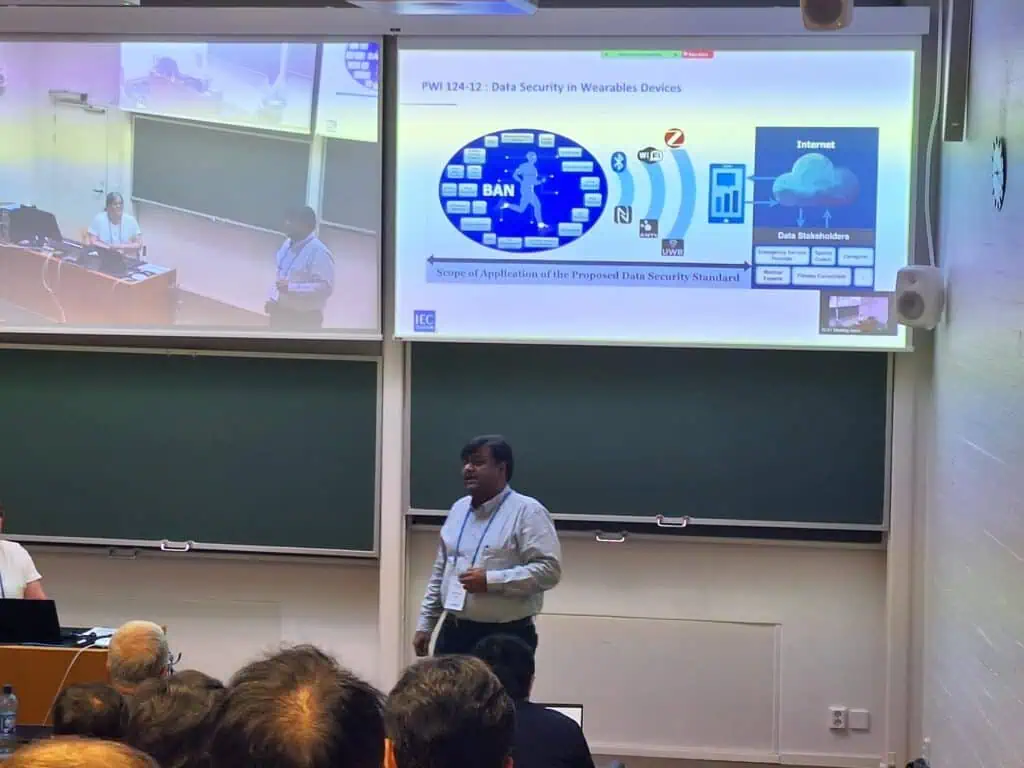
Person in the picture is Mr. Sanjeev Singh
At 5:05 PM
Mr. Satoshi Maeda presented the upcoming technical report IEC TR 63203-8XX-1, which focuses on presenting the autonomic nervous system activity index based on heart rate variability data from wearable devices. This new method allows for a clear and easily understandable presentation of the autonomic nervous system state (sympathetic and parasympathetic), helping users monitor their mental state and physical fitness in real time. The method is not intended for medical use but aims to improve general consumer awareness and understanding of their health. Maeda demonstrated the device he was wearing, showing how it tracked his heart rate and vital signs on his phone. He also presented other wearable products using the same technology to the audience.
You can download the presentation related to the speech from here.
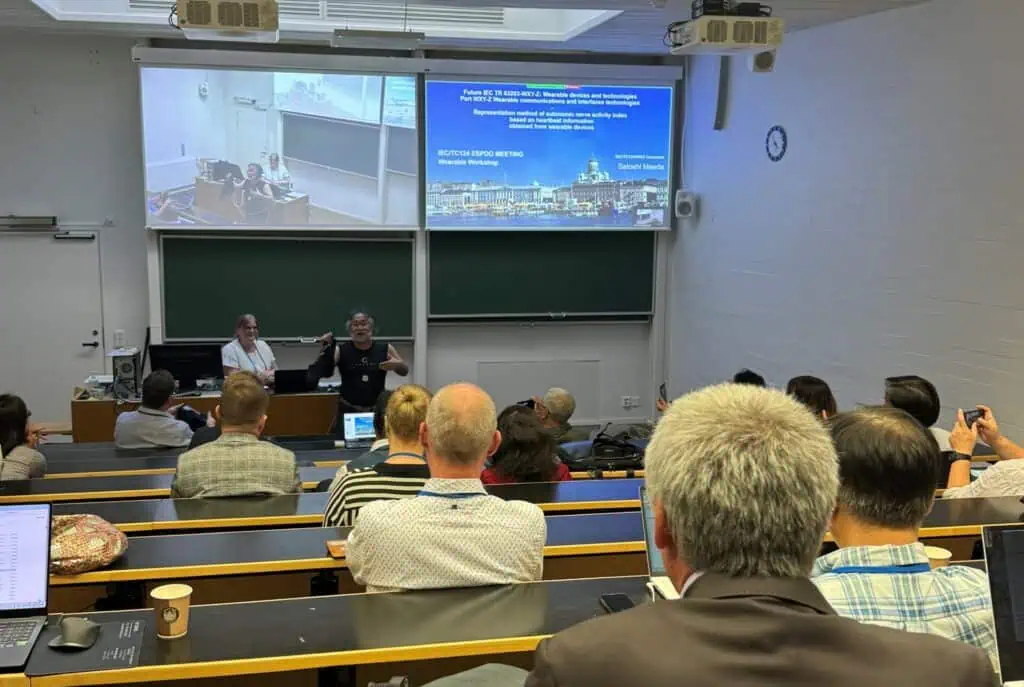
Presenter in the picture is Mr. Satoshi Maeda
At 5:20 PM
The workshops Finnish keynote speaker, Mr. Perttu Rönkkö from Harvia, presented the company’s long history and success story, focusing on the health benefits of the sauna and spa experience. Harvia, founded in 1950, started small but is now the world’s leading manufacturer of sauna and spa solutions, deeply committed to health and wellness. Harvia has expanded its product range to dominate the entire sauna process, enabling a comprehensive experience for professionals and consumers worldwide.
Mr. Rönkkö discussed wearable electronic solutions that Harvia uses to test and monitor the sauna experience and its health effects. Data collection on sauna use and its impacts provides valuable information for product development, healthcare, and research. Mr. Perttu Rönkkö invited the seminar audience to engage in active dialogue to improve the sauna experience using wearable electronics. He also hinted that Harvia is considering its own wearable electronic products.
You can download the presentation related to the speech from here.
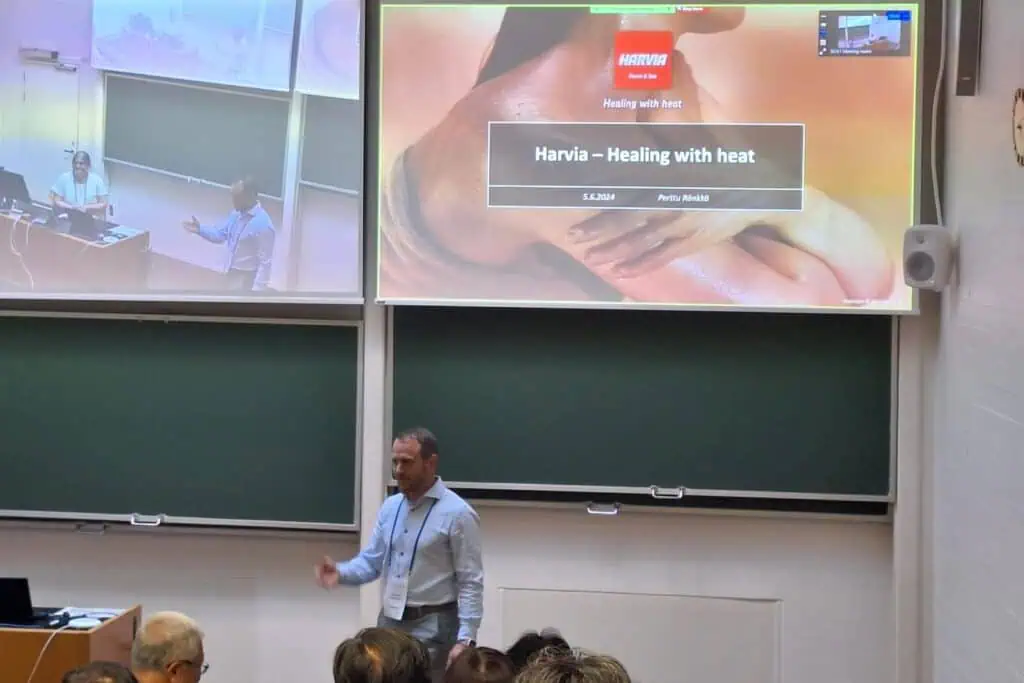
Presenter in the picture is Mr. Perttu Rönkkö
SESKO’s thank you to everyone who participated for a great event.
SESKO’s Group Manager Mr. Arto Sirviö and SESKO’s CEO Ms. Anna Tanskanen thanked the participants and speakers for an informative day.
The workshop was a success, providing participants with a comprehensive overview of current and future standardization projects in the field of portable electronic devices. The event also served as an excellent networking opportunity for industry experts and newcomers.
The Finland’s national mirror committee SK 91 operated by SESKO monitors and participates in the activities of the IEC committee TC 124 and influences the content of the standards being developed there. Participation in the work of SESKO committees is open to all interested parties. Membership in the committee provides an opportunity to also influence the content of international IEC and European CENELEC standards.
Lisätietoja aiheesta